New team enters the Peyton Watson sweepstakes
Add Milwaukee to the list.
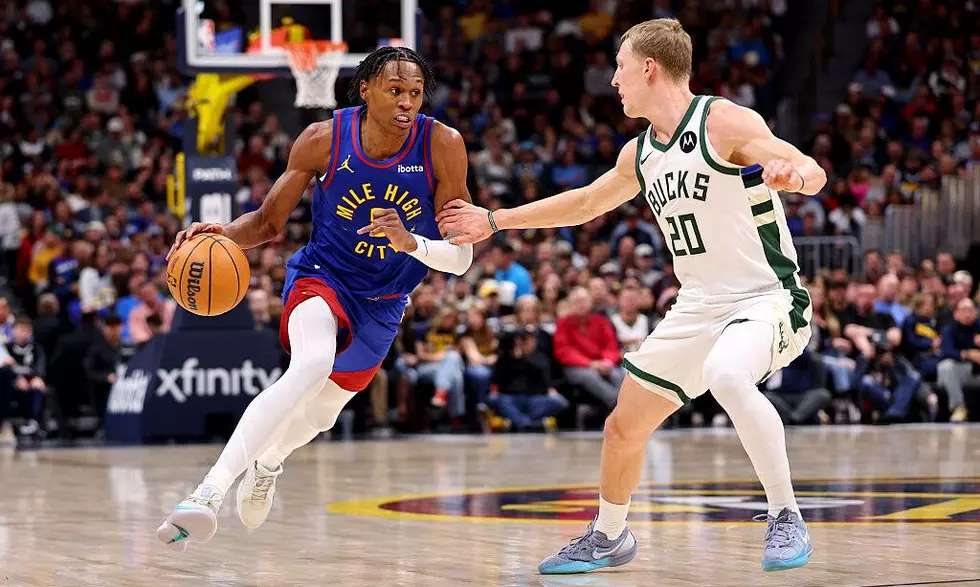
The Bucks have joined the LA Clippers and Atlanta Hawks as teams interested in prying Peyton Watson away from the Denver Nuggets via sign-and-trade, Marc Stein of The Stein Line reported Monday night.
On paper, Milwaukee might make more mechanical sense than either of the other two suitors. The Bucks are sitting on a $25.5 million trade exception created in the Giannis Antetokounmpo trade with Miami — an exception that could absorb Watson’s new salary without Milwaukee having to send players back to Denver.
That matters, because in a sign-and-trade, incoming salary would hard-cap the Nuggets at the first apron and complicate their roster-building. A trade exception avoids that particular headache. Though it’s hard to see the Nuggets letting Watson go for around the same price as Christian Braun’s contract
And it’s worth noting, just because the Bucks can absorb Watson and offer the Nuggets picks doesn’t mean Denver will send him there.
The Nuggets have to agree to any sign-and-trade, and to this point, their asking price has been prohibitive by design — both because Watson’s upside and Denver’s limited avenues to improving the roster short or long term. Jake Fischer of The Stein Line reported last week that Denver is seeking compensation “on par with what Utah received from the Lakers in their recent sign-and-trade swap that made Walker Kessler a Laker.” That return was two unprotected first-round picks and two first-round swaps — a monster haul the Lakers paid for a 7-foot-2 center on a four-year, $130 million deal.
Fischer also reported that the asking price has been “too steep for the Clippers to deeply consider,” pushing LA toward re-signing its own restricted free agent, Bennedict Mathurin. The Clippers’ pursuit is further complicated by the ongoing Kawhi Leonard trade situation with Toronto.
The Hawks’ “fresh interest,” reported by Fischer last week, faces its own math problems — Atlanta would need to send salary back, and the players they’d have to include aren’t ones Denver wants.
Now Milwaukee enters the conversation. But the Bucks just traded their franchise player and are rebuilding around Jaime Jaquez Jr., Kel’el Ware, Kasparas Jakucionis and a pair of rookies. They don’t control their own first-round picks in the coming drafts after the Antetokounmpo deal shipped multiple firsts to Miami. So what are they sending Denver? The trade exception solves the salary-matching problem but it doesn’t solve the compensation problem. Denver isn’t dumping Watson for nothing, and the Bucks aren’t exactly flush with draft picks.
This is a second new suitor to surface in the span of a week — the Hawks, now Milwaukee — and none of them have been able to meet Denver’s price. At some point, the question shifts from “who wants Watson?” to “is anyone actually going to do this?”
Watson is represented by Rich Paul of Klutch Sports, and this has a familiar Klutch feel to it. Jonathan Kuminga’s restricted free agency dragged through much of last summer. Josh Giddey’s lingered. The strategy is patience — keep the market alive, keep names circulating, keep the incumbent team from getting too comfortable with the price dropping. Every new reported suitor, whether the interest is genuine or performative, serves that purpose.
The Nuggets, for their part, have said they will match any offer sheet Watson receives. The Athletic reported last week that Denver is open to sign-and-trade scenarios but plans to match regardless.
What a sign-and-trade with Milwaukee would actually accomplish for Denver is worth examining, though. The Nuggets would shed Watson’s incoming salary — likely in the $22 million to $25 million range annually — which would provide tax relief. ESPN’s Bobby Marks projected the Nuggets’ tax bill could approach $200 million if they keep Watson and remain a repeat-tax team. Using the Bucks’ trade exception, Denver could move Watson without taking salary back, getting under the second apron and maybe even approaching the first apron line depending on other moves.
But getting under the tax for appearance’s sake isn’t a roster-building strategy. Flexibility sounds great until you realize there isn’t much flexibility to be had in this NBA. The Nuggets lack the draft assets to make a significant trade. They don’t have freed up funds even without Watson. The teams that do have room are spending it on other players. Shedding Watson to save Kroenke Sports and Entertainment money doesn’t put a better player in his spot — it just makes the roster worse and the tax bill lighter.
An anonymous Western Conference scout told ESPN earlier this offseason what everyone around the league already assumed: “They could easily just pay him and pay the tax, but we know how the Kroenkes operate. That means sending out either (Cameron) Johnson or Braun, and I don’t know where that lands.”
Johnson has also been linked to Milwaukee as a potential trade target by at least one writer, which adds another layer. If the Bucks are interested in both Watson and Johnson, the Nuggets could theoretically move one or both to Milwaukee in some combination — but again, only if the return justifies it.
Watson averaged 14.6 points, 4.9 rebounds and 2.1 assists in 54 games last season, shooting 49.1% from the field and 41.1% from 3. He’s 23, fits the most coveted archetype in the modern NBA as a 6-foot-8 two-way wing, and is likely the last realistic shot the Nuggets have at developing a star alongside Nikola Jokic.
Sending him to a rebuilding Milwaukee team for tax savings and a light draft return would be a hard sell to a fan base that already watched Michael Porter Jr. get shipped to Brooklyn.
More From 102.9 The Fan - KARS-FM