
Still last and losing, the Rockies had a pretty bright first half
The Colorado Rockies enter the All-Star break in last place in the National League West, three games behind the San Francisco Giants for fourth, sporting the worst record in the NL — again.
But if you watched any of the 98 games that got us here, you know the vibe is different. This is not the 2025 Rockies. This is not the club that went 43-119, posted the worst run differential in the modern era (-424) and made you want to quit baseball.
This year’s Rockies team runs and fights.
“They believe, that’s the biggest part,” manager Warren Schaeffer said after a near-comeback against the Twins in late June. “And they keep coming.”
At 39-59, Colorado is on pace for roughly 66 wins — a 23-game improvement over last year’s historically horrid campaign.
That won’t get you a banner. But in the first year of the Paul DePodesta era, with a new front office philosophy finally taking root, it’s the kind of step that was supposed to happen. ESPN slapped a C- midseason grade on the Rockies, but even David Schoenfield conceded they’re “vastly improved” and “on track to win 23 more games than last year, which … counts as a minor surprise.”
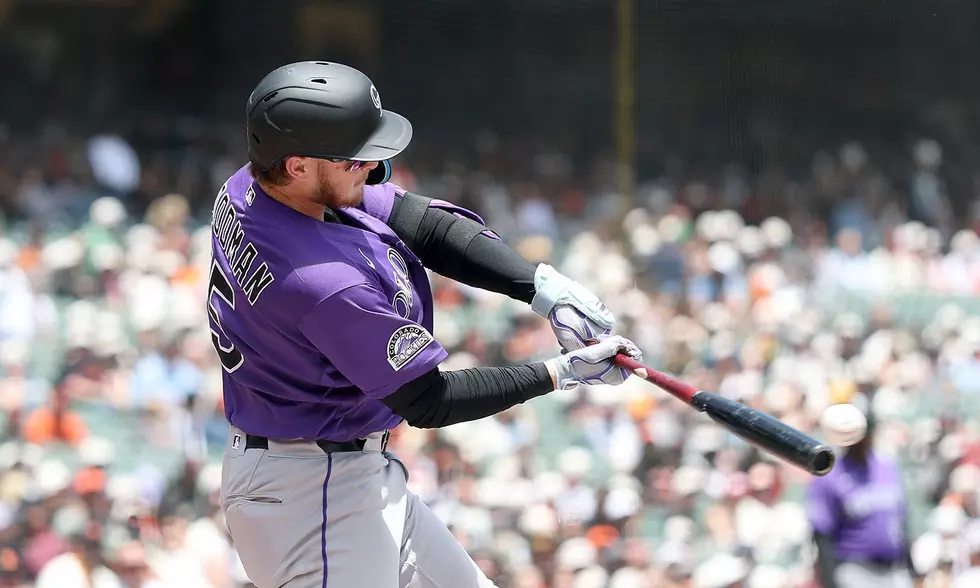
First Half MVP: Hunter Goodman, C
Goodman hits the break with 27 home runs, 51 RBI, a .254 average and an .863 OPS, and he’ll be behind the plate at some point Tuesday night in Philadelphia as a National League All-Star reserve for the second straight year. He’s the first Rockie to earn back-to-back All-Star nods since Nolan Arenado, Charlie Blackmon and Trevor Story all did it in 2018-19.
And very impressively — 18 of Goodman’s 27 homers have come on the road, the most pre-All-Star break road homers by a Rockie in franchise history. Hall of Famer Larry Walker hit 16 road bombs before the break in his 1997 MVP season. Goodman passed him.
“You can’t say enough good things about Goody,” Schaeffer said when the selection was announced. “He’s been doing it the past couple of years at a very high level. To get honored by the All-Star Game — it’s something that you can’t take away from him.”
First Half Best Surprise: Antonio Senzatela, RP
If you told me in March that Senzatela — the longest tenured Rockie since, who has spent the better part of three years trying to come back from major arm injuries — would be Colorado’s most reliable pitcher at the break, it would’ve made my head twist like Dinger’s
And yet. Senzatela is 9-2 out of the bullpen with a 3.31 ERA.
He’s reinvented himself as a multi-inning reliever, and he’s been excellent. The conversion from broken-down starter to bullpen weapon is exactly the kind of player development win this organization desperately needed.
Is he a trade chip at the deadline? Absolutely.
First Half Best Breakout: TJ Rumfield, 1B
Paul DePodesta acquired Rumfield from the Yankees over the winter for reliever Brendan Chivilli, who has since been shelved with a shoulder injury in New York. Rumfield won NL Rookie of the Month in May (.310, 4 HR, 12 RBI) and then did it again in June (.316, .989 OPS, .400 OBP, 5 HR, 17 RBI, a hit in 18 of the Rockies’ final 19 games of the month).
The 26-year-old first baseman ranks in the 93rd percentile in batting run value and the 87th percentile in strikeout rate. Rumfield’s ROY case is real, and that’s shocking!
First Half Biggest Disappointment: Ezequiel Tovar, SS
Tovar was supposed to be the franchise shortstop, the defensive whiz who was going to add offensive punch in his age-24 season. But he hasn’t yet added that bite.
He has a .200/.243/.330 slash line and a 41 wRC+ through 341 plate appearances. That’s the worst hitter in MLB by 17 points and a stunning 59% below league average. Not even a strong glove can get you by with that performance at the plate.
Tovar needs to have a big second half or there should be questions about his future especially with the Rockies loading up at shortstop in the minors.
First Half Most Frustrating: Ethan Holliday & Chase Dollander
These two get lumped together because the frustration isn’t about performance. It’s about the future being delayed.
Holliday, the Rockies’ No. 1 prospect and the No. 17 prospect in baseball, was catching fire at Single-A Fresno — .295 with six homers in May alone — before a stress fracture in his left foot ended his season. Surgery. Done. The 19-year-old kid, the fourth overall pick, the son of a Rockies legend, won’t play another game until 2027.
Dollander, arguably the most important arm in the organization, was having a legitimate breakout — 3.89 ERA, 1.30 WHIP, 47 strikeouts in 44 innings — before his right elbow gave out. He underwent internal brace surgery in June. It ended his season and will likely cost him the first half of 2027, too.
Two young pillars of the rebuild. Two season-ending surgeries. That’s the biggest story of the Rockies season, sadly.
First Half Bright Spot: Cole Carrigg
One of the Rockies top prospects got an earlier than expected call up, maybe due to Brenton Doyle, Mickey Moniak and Jordan Beck all all being on the IL at once.
But those guys have come back healthy and Carrigg hasn’t been sent back down — and for good reason.
The switch-hitter is slashing .273/.356/.515 through 119 plate appearances since his callup. Three homers in his first 36 at-bats, including a go-ahead three-run shot at Wrigley. A game-tying double off Dodgers closer Tanner Scott in the ninth at Chavez Ravine. A 2-for-4, three-RBI night in the Red Sox comeback.
Then there’s the arm. Carrigg uncorked a 99.8 mph throw from center to nail Ian Happ at third — the fifth-hardest outfield assist in baseball this season.
“Right on the money,” Schaeffer said. “When he’s such a dynamic player, he can affect the game on both sides of the ball.”
The next night he dove face-first into the Wrigley ivy for a catch and came up smiling. “It felt like brick,” Carrigg said. “Making a catch in the ivy is pretty cool.”
He’s 24 and he matches a lot of what Schaeffer is trying to build.
The DePodesta Effect
Give credit where it’s earned. When DePodesta took over as president of baseball operations last winter, inheriting the smoldering wreckage of three consecutive 100-loss seasons, nobody expected miracles. The plan was simple: install a new culture, bet on durability in the rotation by signing veterans Tomoyuki Sugano, Jose Quintana and Michael Lorenzen to one-year deals, acquire young talent where possible and start shifting the organizational philosophy toward pitching development.
Some of it’s worked. Rumfield is a revelation, Kyle Karros has shown real promise at third base with his given chance. The Rockies overhauled their pitch design and some of it could be helping.
Some of the fixes aren’t there yet, which is to be expected. The pitching staff is still at or near the bottom of the sport in basically everything. The veteran arms keep dealing with injury issues so they haven’t been able to eat as many innings as hoped.
But the identity? That’s actually shifting. Schaeffer is a big part of that.
What Happens at the Deadline?
The Aug. 3 trade deadline looms, and the Rockies will be sellers. That’s not a question. The question is how aggressive DePodesta gets.
The trade candidate list is long: Goodman, Moniak, McCarthy, Senzatela, Feltner, Lorenzen, Herget, Bernardino.
Every one of those names will draw calls. Goodman, the All-Star catcher has plenty of team control and that would be the biggest chip of all — and the hardest to part with.
The smart play? Sell everything. This organization is crying out for arms. The Rockies cannot build a sustainable winner without developing pitching.
The Bottom Line
The 2026 Colorado Rockies are bad. They’re also, for the first time in half a decade, interesting.
They have a franchise catcher mashing on the road. They have a rookie first baseman stolen from New York. They have a manager who’s built a culture where guys actually believe they can win.
There’s a long way to go, but the Rockies actually feel like they’re on the journey upward for the first time in a long time.
More From 102.9 The Fan - KARS-FM